
Hongda Investment Group

1390 S State College Blvd,
Anaheim, CA 92806

001-626-662-9111 West Coast
001-404-421-0746 East Coast
Green Low-Carbon Circular Economy
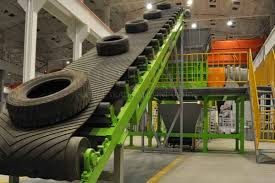

Edurance Technologies Group, which is a subsidiary of Hongda group, commercially-tested and proven process enables us to recover materials used in tire production and manufacture countless new, valuable outputs. Executed in the most sustainable fashion in the world, our process uses 90% less CO2, H2O, and energy than traditional methods.
Edurance Technologies delivers transformative solutions for the rubber, plastics, and petrochemical industries that address global problems by providing sustainable, circular products from end-of-life tires (ELTs).
Our flagship product is 100% produced from post-consumer or post-industrial tires and rubber scrap. Edurance Technologies is currently establishing tire crumb rubber and pyrolysis oil production facilities in the central United States, with an annual processing capacity of up to 5 million waste tires.
1. Market Status and Size
-
Rapid Growth: The global waste tire recycling market is experiencing strong growth, with a compound annual growth rate (CAGR) of approximately 8.5%. Increasing environmental pressure and stricter sustainability requirements are driving the continued expansion of the industry.
2. Recycling Methods and End Products
-
Reclaimed Rubber and Crumb Rubber Production:Used tires can be shredded into rubber granules or powder for applications such as: athletic tracks, road paving, artificial turf infill, industrial rubber products
-
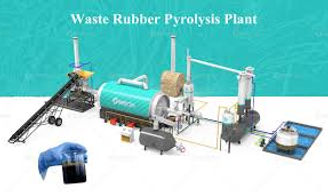
Pyrolysis: Pyrolysis is an advanced and environmentally friendly treatment technology that thermally decomposes waste tires into fuel oil, recovered carbon black, steel wire, combustible gas
-
Tire Retreading: Retreading extends tire life by repairing and replacing the tread for reuse. This method accounts for a relatively high share of tire recycling in Europe and North America, while the retreading rate in China remains comparatively low.
-
Direct Combustion: Waste tires can also be used directly as fuel in: cement kilns, power plants. This approach is still more commonly adopted in developed Western markets.
3. Recycling Prices and Industry Value Chain
-
Recycling Prices: Waste tires are typically purchased by ton or by unit, with prices influenced by factors such as: tire condition, wear level, degree of damage, tire type and size, Collection and Flow.
-
Used tires are generally collected from: tire shops, repair shops, service centers. They are then transferred to specialized waste tire recyclers and incorporated into regulated environmental recycling and resource recovery systems.
4. Industry Challenges and Outlook
-
Challenges: As environmental regulations continue to tighten, traditional low-value and extensive disposal methods—especially uncontrolled burning—are increasingly restricted. As a result, the industry is shifting toward higher-value and more refined utilization pathways, including: high-quality recovered carbon black, green pyrolysis technologies, advanced material recovery
-
Outlook: Rubber is an important industrial resource. Under the global trend toward sustainability and circular economy development, the transformation of waste tires into valuable secondary resources offers broad long-term growth potential.
News
-
March 10, 2026 | Waste Tire Prices Surge Across the Board, Bringing Unexpected Revenue Growth for Tire Shops
-
In March 2026, against the backdrop of persistently high international crude oil prices, the waste tire recycling market experienced a strong wave of price increases. Once regarded as “black waste,” end-of-life tires have now undergone a remarkable transformation through pyrolysis technology, becoming highly sought-after resources for downstream chemical and energy companies.
-
As a result, recycling prices have risen sharply across the market, creating a new blue-ocean opportunity in the circular economy valued at nearly USD 10 billion.
-
-
November 8, 2024 | U.S. Waste Tire Recycling Rate Continues to Rise, as USTMA Promotes a Fully Circular System
-
On November 8, the U.S. Tire Manufacturers Association (USTMA) released its 16th Scrap Tire Management Report, highlighting significant progress in waste tire recycling and utilization across the United States.
-
According to the report, 79% of end-of-life tires successfully entered end-use markets, reflecting the strong momentum of the tire recycling industry and an overall utilization growth of 10.5%.
-
This data confirms that waste tires continue to outperform many other consumer materials in terms of recycling rates, including metal, glass, aluminum, plastics, and paper, underscoring the industry’s sustained efforts over many years.
-
-
June 19, 2024 | New U.S. Initiatives Advance Waste Tire Recycling
-
Recently, the U.S. Tire Manufacturers Association (USTMA) announced a partnership with the Tire Industry Association (TIA) to establish a Tire Recycling Foundation aimed at supporting the tire recycling supply chain in the United States.
-
The foundation will help secure funding and grants for research, education, intervention, and demonstration projects, addressing critical knowledge and research gaps within the U.S. tire recycling supply chain.
-
Its long-term goal is to achieve 100% recycling of end-of-life tires into circular and sustainable end-use markets.
-
Tire recycling is technically challenging due to the complex material composition of automotive tires. Tires are made from a combination of: natural rubber and synthetic rubber, steel, textile fibers, carbon black, various chemical additives. It is precisely this material complexity that makes high-quality recycling difficult.
Mechanical recycling primarily produces rubber granules or crumb rubber, which generally have relatively limited end-use applications. Chemical recycling processes such as pyrolysis and devulcanization offer more promising pathways, as they enable the recovery of valuable materials such as oil, gas, carbon black, steel.
We recycle all types of tires, including:
-
inner tubes
-
agricultural tires
-
passenger vehicle tires
-
large machinery tires
We provide high-quality crumb rubber, carbon black, and pyrolysis oil.
We welcome inquiries from customers and business partners.
.jpg)
.jpg)
